

Monday again. This is where we land every Monday, with one small rhythm to try this week, small enough to fit into a full life and useful enough to be worth the few minutes it costs.
This Week’s Rhythm
Once a day this week, eat one meal without a screen in sight. Not a television murmuring in the corner, and not a phone propped against the water jug. Put the devices in another room, sit down, and eat.
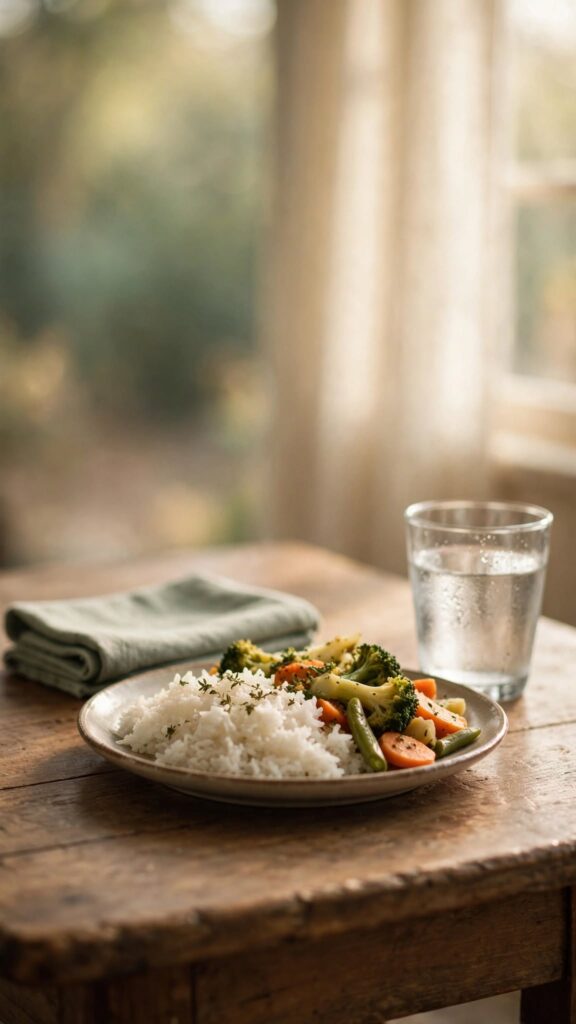
It can be any meal. Breakfast on a work morning counts, and so does a plate of rice eaten alone at the kitchen counter. If you live with others, invite them into it. If you live alone, keep the practice anyway. A meal eaten alone and slowly is still a meal eaten well.
That is the whole practice. One meal, seated, with nothing in your hands but food.
If your household eats at different times, do not force everyone to the table at once. Simply choose the meal that you control. The aim is not a perfect family dinner. The aim is to be present for at least one ordinary act of eating each day.
Why This One Matters
Most of us eat while doing something else. We answer messages over breakfast, and we watch something while the food goes cold. After a while, a meal becomes little more than fuel taken on the way to the next task, and we hardly remember eating it.
Something is lost when that happens. Food is one of the most basic gifts we receive, three times a day, and we pass it by without a thought. A person who eats without noticing has missed a small chance to say thank you, and the thanks that go unspoken tend to shrink the heart.
The Bible gives meals a surprising amount of attention. The Teacher in Ecclesiastes wrote that we should go and eat our bread with enjoyment and drink our wine with a glad heart, because God has already approved what we do. – Ecclesiastes 9:7. He did not treat eating as a distraction from the serious business of life. He treated it as part of the gift.
One of the psalm writers pictured a family seated around the table, with children like young olive shoots.
3 Your wife will be like a fruitful vine
Psalm 128:3 New International Version
within your house;
your children will be like olive shoots
around your table.
It is a gentle image of ordinary life going well, and it takes place at a meal. Luke describes the early church breaking bread together in their homes and eating with glad and sincere hearts. – Acts 2:46. The ordinary table was where much of the faith was lived out, and it did not require a stage.
And it was at a table that two disciples, walking home from Jerusalem in despair, finally recognized Jesus.
28 As they approached the village to which they were going, Jesus continued on as if he were going farther. 29 But they urged him strongly, “Stay with us, for it is nearly evening; the day is almost over.” So he went in to stay with them.
30 When he was at the table with them, he took bread, gave thanks, broke it and began to give it to them. 31 Then their eyes were opened and they recognized him, and he disappeared from their sight.
Luke 24:28-31 New International Version
He took the bread, gave thanks, and broke it, and their eyes were opened. They had walked with Him for miles without knowing Him. It was in the simple act of sharing a meal that they saw.
How to Actually Try This Rhythm
Choose your meal in advance, so that the decision is already made when the hour arrives. Many people find that breakfast or the evening meal works best, but the right choice is the one you are most likely to keep.
Before you sit down, put the phone in a drawer or another room. If you notice a small tug of worry about being out of reach, let it pass. Almost nothing that arrives in twenty minutes cannot wait for twenty minutes.
Set the food on a plate, even if it is only toast. Sit down. Before the first bite, pause for a few seconds and say a short thanks. It does not have to be a formal grace. Thank you, Lord, for this food, will do very well.
Then eat slowly enough to taste it. Notice the temperature and the texture. You may find that a plain meal is more interesting than you remembered. Put your fork down now and then. If you are with others, ask a question that is not about logistics and listen to the answer.
When you finish, stay seated for a moment. Say thanks again, silently if you like, and then clear your plate. The whole thing can take twenty minutes, and often much less.
What a Tiny Practice Can Do
A single meal without a screen will not change your life by Friday, and I will not pretend that it will. But it gives you a short stretch of the day in which you are fully where you are.
Many people find that they eat less hurriedly and notice when they are full. Some find that conversations at the table become easier, because no one is half somewhere else. Children, in particular, tend to talk more when a parent is truly listening, and they may surprise you with what comes out.
If you eat alone, the practice can be quietly restorative. A meal with no noise in it gives you a moment to notice how you are. You may find that you are more tired than you thought, or simply grateful for a warm plate of food. Both are worth knowing.
There is also a deeper point. Each time you pause to give thanks, you remind yourself that your daily bread comes from a Hand other than your own. Jesus taught His followers to pray for it by name, and the prayer was meant to be small and daily. – Matthew 6:11.
When It Does Not Go to Plan
Some days will not allow it. You will eat in the car, or standing at the counter while a child asks for something. That is part of life. On those days, shrink the practice. Put the phone face down, take three slow bites in silence, and say a quick thanks. A smaller version still counts.
If your household resists, be gentle. Do not turn the table into a lecture on screens. Make it pleasant and short, and let the habit grow at its own pace. People rarely resist good food and good company for long.
If you miss a few days, do not treat it as a failure. Start again whenever you remember. This rhythm is meant to hold you loosely, and it will be there when you return.
Read Also: Grace-in-the-details (series tag)
Read Also: Stewardship Spotlight: Cancel One Subscription You No Longer Use
Try It and Tell Us How It Went
Give this a real try this week. Then come back and tell us in the comments how it went. Did the meal feel like a pause, or did the absence of the phone feel odd? Both answers are worth sharing, and both help us learn how to adjust this rhythm for different households and different seasons.
We will be eating without our phones this week too.
Back next Monday with another small rhythm worth trying together.