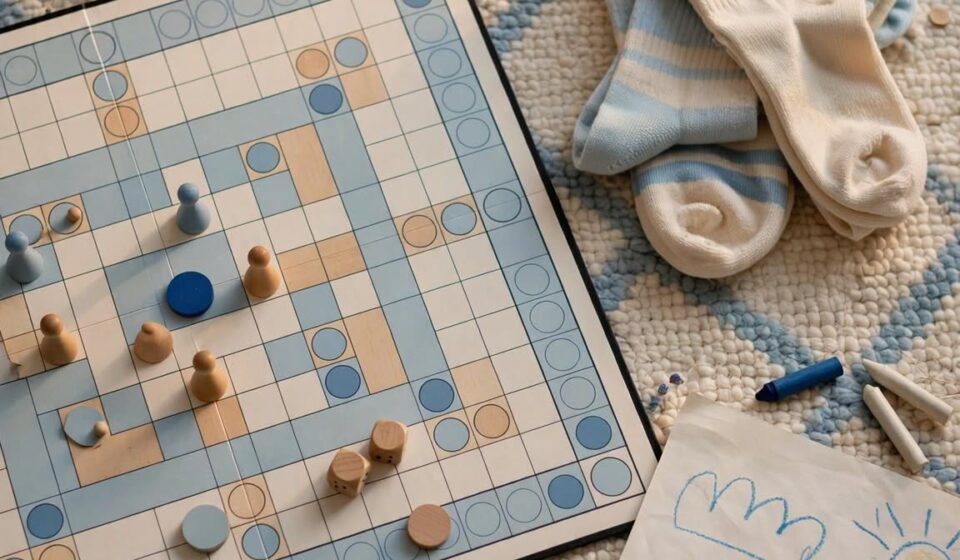

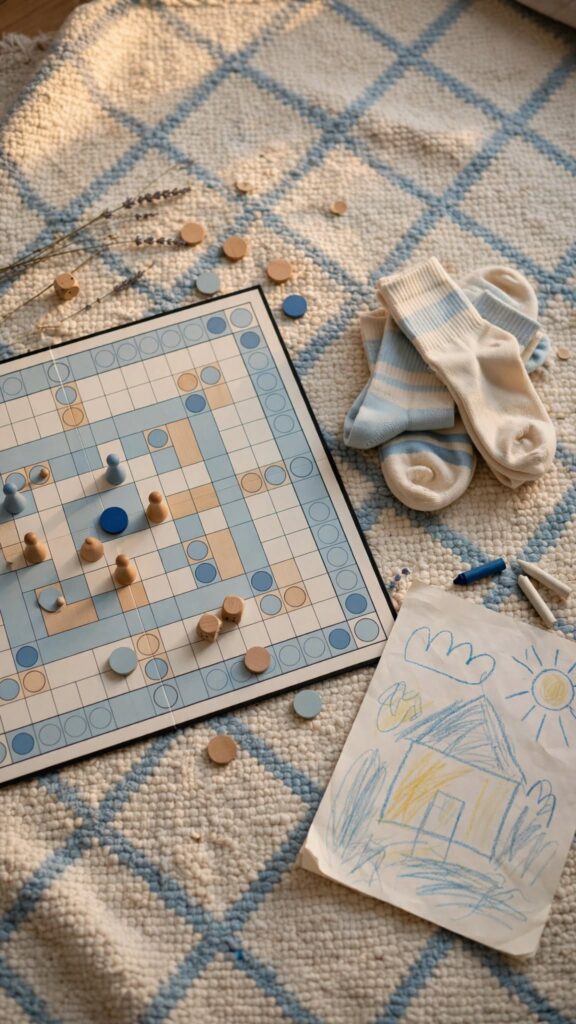
She announced family game night with real enthusiasm one Friday, pulled out a board game nobody had touched in months, and watched the whole thing collapse within twenty minutes into an argument over rules, a toddler knocking over the pieces, and a teenager who clearly would rather have been anywhere else. She sat afterward, deflated, wondering whether her family was simply incapable of resting together the way other families seemed to manage so easily in every photo she had ever scrolled past online.
Maybe you have probably tried something similar, a planned family rest activity that fell apart before it ever produced the connection you were hoping for. I want to talk with you honestly about why forced family rest so often backfires, and what actually tends to build a rhythm your family can genuinely sustain.
Why Forcing Rest Rarely Works
You cannot command genuine rest into existence through just scheduling any more than you can command genuine joy. A mandatory game night, announced with real hope and enthusiasm, still asks every family member to arrive already regulated enough to engage, and a household running on exhaustion, sibling tension, or a hard week rarely shifts into genuine playfulness simply because a calendar block says it should.
You are not failing your family by discovering this the hard way. Most attempts at forced family connection run into the same basic problem, which is when we start treating rest as an event to execute correctly rather than a condition that has to be genuinely present in the people involved before any specific activity can actually deliver on its promise. A family too depleted for real rest will bring that depletion into whatever activity gets scheduled, and the activity itself rarely has the power to override an already exhausted starting point.
What the Bible Actually Models About Family Rest
You might expect scripture to offer a rigid formula for family togetherness, but the pattern it actually models looks more organic than that. Moses instructed the Israelites to talk about God’s commands when they sat at home, when they walked along the road, when they lay down, and when they got up, a language describing something woven naturally throughout ordinary life rather than confined to a single scheduled, mandatory event each week.
6 These commandments that I give you today are to be on your hearts. 7 Impress them on your children. Talk about them when you sit at home and when you walk along the road, when you lie down and when you get up.
Deuteronomy 6:6-7 New International Version
And this matters a whole lot for how you might think about family rest specifically. The instruction was never build one perfect weekly ritual and force everyone to comply with it. It was let this be present throughout the ordinary texture of your days, at the table, on a walk, in the quiet moments before sleep, wherever genuine connection actually has room to happen rather than only where a calendar insists it must.
Reading What Your Family Actually Needs
I would guess that you likely already know this, that if you slow down enough to notice, what genuinely restful connection looks like for your family, rather than the version pictured in someone else’s curated online post, you and your family will get to enjoy the rest. A family with young, high-energy children may find genuine rest looks more like an unstructured hour outside than a quiet board game requiring more patience than anyone currently has available. A family with teenagers may find genuine connection happens more easily in the car during a shared errand than during a mandatory sit-down activity everyone feels obligated to perform happily for.
Noticing when your family actually seems most at ease together, rather than assuming a specific activity should work simply because it worked for another family, will reveal far more useful information than any generic list of family bonding ideas ever could. And you might notice that genuine laughter happens most naturally during a particular shared task, cooking together, a specific drive, an ordinary evening with no plan attached at all. And that observation is worth building around, more than an activity chosen primarily because it photographed well somewhere else first.
Building Small, Sustainable Anchors Instead
You do not need one perfect, elaborate weekly ritual. A few small, low-pressure anchors, offered consistently rather than performed occasionally with high expectations attached, will build genuine family rest more reliably than an ambitious plan attempted once with enthusiasm and then abandoned after the first disappointing attempt.
A shared meal, even a simple one, with phones genuinely absent rather than just silenced nearby, offers one of the more reliable anchors available to almost any family regardless of age or temperament. And this does not require elaborate cooking or a formal sit-down every single night. It just requires consistency and genuine presence more than any particular menu or setting.
A brief, low-stakes tradition, five minutes before bed sharing one good thing from the day, a specific song played during a Sunday drive, a particular walk taken on a specific day of the week, tends to build genuine connection more reliably than an ambitious, high-effort event scheduled only occasionally. Small and frequent generally outperforms large and rare when it comes to actually shaping a family’s shared rhythm over time, because and again, the point is blissful rhythm.
Releasing the expectation that every attempt must succeed matters here too. A game night that falls apart occasionally is not evidence that your family cannot rest together. It is simply an honest reflection of a hard day, a tired child, or a mismatched activity for that particular evening. Trying again another week, without treating the failed attempt as a verdict on your family’s capacity for genuine connection, will serve you far better than abandoning the whole effort after one disappointing evening.
Letting Go of the Curated Comparison
Remembering that every family, including the ones behind those beautiful photographs, has its own version of the collapsed game night, the toddler who ruins the moment, the teenager who would rather be anywhere else, tends to soften the sting of comparison. Your family’s genuine, imperfect rhythm, built slowly through small, repeated anchors rather than dramatic, photographable moments, is not a lesser version of family connection. It may simply be the truer, more sustainable version, considerably less visible online precisely because it rarely produces a single, camera-ready frame worth sharing.
What to Do When Family Members Resist
You may be facing genuine resistance from a specific family member, a teenager who wants nothing to do with any planned family time, a spouse who does not share your instinct toward intentional connection. This deserves honest acknowledgment rather than a simple assumption that enough persistence will eventually produce full buy-in from everyone involved.
So I would suggest that lowering the stakes, it considerably tends to help here, offering an invitation rather than a mandate, and accepting a smaller, less enthusiastic version of participation rather than insisting on full engagement every time. A teenager who sits nearby scrolling during a family evening, present but not fully engaged, is still present, and continued low-pressure invitation over time will produce more genuine connection eventually than an insistent demand for immediate enthusiasm ever manages. And mind you, patience here matters more than any specific technique, since a family rhythm builds gradually across years, not within a single determined season of effort.
Read Also: The Practice of Blessing Your Home Through Prayer
Read Also: When Your Spouse Does Not Share Your Vision for an Ordered Home
Read Also: Learning to Receive Help Without Guilt
Conclusion
The woman whose game night collapsed within twenty minutes was not failing to build a restful family life. She was simply discovering, the way most families eventually do, that genuine connection resists being forced into a single, high-stakes weekly event and grows instead through small, ordinary, repeated moments woven throughout the actual texture of daily life.
My dearest readers, let go of the single perfect ritual you may have been chasing, and build instead around what your specific family actually seems to need, a shared meal genuinely present for, a small tradition repeated without much fanfare, an invitation extended patiently even to a resistant teenager. That quieter, more ordinary rhythm, built slowly and without forcing it, tends to hold a family together considerably more reliably than any single impressive evening ever could.