
This is where we land every Sunday, after This Week’s Verse. Each week we pick one verse or question that seems hard or contradictory, and I give the best answer I can. Sometimes the answer will settle the matter. Sometimes some doubt will remain in the room, and when that happens I will say so.
John had been teaching the children’s class at his church for three years, and he had never once been caught off guard. Then one Sunday, an eight-year-old boy in the front row put up his hand while John was halfway through the story of Abraham and Isaac. The boy asked, very seriously, whether God would ever ask his father to do that to him.
The room went quiet. John had told the story many times as a lesson about obedience, and the children usually nodded and moved on to the craft. But this child was looking at him with a worried face.
He said something about how it was only a test and though everything turned out fine; the boy did not look reassured. John went home that afternoon and read the passage again, as if for the first time.
What the Text Says
God tells Abraham to take his son, his only son Isaac, whom he loves, and to offer him as a burnt offering on a mountain that God will show him.
Abraham gets up early the next morning. He took his donkey and sets out with Isaac and two servants, carrying wood for the fire. It takes three days to reach the place, which means he has a long time to think.
On the way up, Isaac asks the question that most of us would ask. They have the fire and the wood, he says, but where is the lamb? And Abraham answers, God himself will provide the lamb, my son.
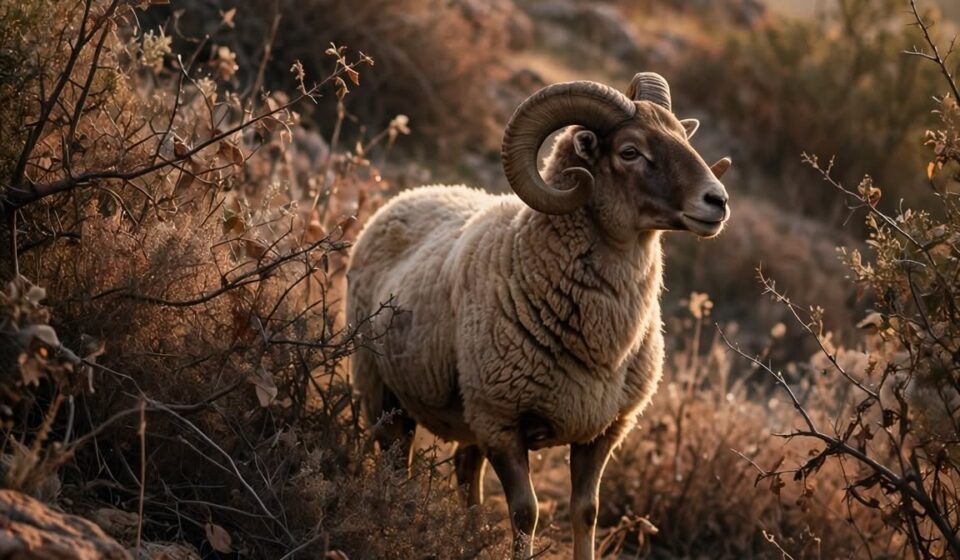
Then Abraham binds Isaac, lays him on the altar, and raises the knife. At that moment, an angel of the Lord calls out his name and tells him not to harm the boy. Abraham looks up and sees a ram caught by its horns, and he offers it in place of his son.
Why This Is Hard
God asks a father to kill his child. Even if the story ends well, that request sits uncomfortably beside everything else the Bible says about God’s character. Many readers, including thoughtful and faithful ones, have felt that something is wrong here.
There is also the question of what this does to Isaac. The text says almost nothing about how he felt. We are left to imagine a young man lying bound on wood. I think these reactions are right and honest. A reader that does not feel the weight of this story has missed it.
It Is Called a Test
The first thing to notice is how the writer introduces the account. The first sentence says that God tested Abraham. The bible tells us this at the start, though Abraham himself does not know it.
Abraham Tested
22 Some time later God tested Abraham. He said to him, “Abraham!”
“Here I am,” he replied.
2 Then God said, “Take your son, your only son, whom you love—Isaac—and go to the region of Moriah. Sacrifice him there as a burnt offering on a mountain I will show you.”
3 Early the next morning Abraham got up and loaded his donkey. He took with him two of his servants and his son Isaac. When he had cut enough wood for the burnt offering, he set out for the place God had told him about. 4 On the third day Abraham looked up and saw the place in the distance. 5 He said to his servants, “Stay here with the donkey while I and the boy go over there. We will worship and then we will come back to you.”
6 Abraham took the wood for the burnt offering and placed it on his son Isaac, and he himself carried the fire and the knife. As the two of them went on together, 7 Isaac spoke up and said to his father Abraham, “Father?”
“Yes, my son?” Abraham replied.
“The fire and wood are here,” Isaac said, “but where is the lamb for the burnt offering?”
8 Abraham answered, “God himself will provide the lamb for the burnt offering, my son.” And the two of them went on together.
9 When they reached the place God had told him about, Abraham built an altar there and arranged the wood on it. He bound his son Isaac and laid him on the altar, on top of the wood. 10 Then he reached out his hand and took the knife to slay his son. 11 But the angel of the Lord called out to him from heaven, “Abraham! Abraham!”
“Here I am,” he replied.
12 “Do not lay a hand on the boy,” he said. “Do not do anything to him. Now I know that you fear God, because you have not withheld from me your son, your only son.”
13 Abraham looked up and there in a thicket he saw a ram caught by its horns. He went over and took the ram and sacrificed it as a burnt offering instead of his son. 14 So Abraham called that place The Lord Will Provide. And to this day it is said, “On the mountain of the Lord it will be provided.”
Genesis 22:1-14 New International Version
This matters because it tells us what God intended. He did not intend for Isaac to die. The scripture is careful to let us know, before the events begin, that the whole episode was a test of Abraham’s trust.
I realize that this does not remove every difficulty, and I will come back to that. But it does change what kind of story we are reading. It is not an account of a deity Who wanted a child’s blood. It is an account of a God Who was testing, and Who stopped the knife.
What the Neighbors Believed
Context always helps a lot here. The nations around Abraham had gods who were believed to demand children, and some of them practiced child sacrifice. A father who offered his firstborn might have been thought especially devout.
And against that background, the ending of the story is striking. God stops Abraham, and He provides a substitute. Later, the law given through Moses explicitly forbade giving children to the god Molech, and it described such practices as detestable to the Lord.
21 “‘Do not give any of your children to be sacrificed to Molek, for you must not profane the name of your God. I am the Lord.
Leviticus 18:21 New International Version
So the story does not endorse child sacrifice. It obviously dismantles it. It shows a God Who is unlike the gods of the neighbors, because He does not want the child. He wanted Abraham’s heart, and He gave back the boy.
What Abraham Believed
Another detail changes the picture. The writer of Hebrews tells us that Abraham reasoned that God could even raise the dead.
17 By faith Abraham, when God tested him, offered Isaac as a sacrifice. He who had embraced the promises was about to sacrifice his one and only son, 18 even though God had said to him, “It is through Isaac that your offspring will be reckoned.” 19 Abraham reasoned that God could even raise the dead, and so in a manner of speaking he did receive Isaac back from death.
Hebrews 11:17-19 New International Version
This may explain why he said to his servants, at the foot of the mountain, that he and the boy would worship and then come back to them.
Again, he said we will come back. Whether he spoke in faith or in hope, he expected something good. And he said to Isaac: “God will provide.” Abraham had known God for a long time. He had been promised that Isaac would carry the line of blessing, and he trusted that God would not contradict Himself.
And for some, even now, that still does not make it easy. But it suggests that Abraham was not a man mechanically following a cruel order. He was a man holding two things together that did not seem to fit, and trusting the One Who had given both.
The Father Who Did Not Stop
There is a deeper layer, and the New Testament points to it. In the story, a substitute is provided at the last moment. A ram dies in place of the son.
Paul writes, in his letter to the Romans, that God did not spare His own Son, but gave Him up for us all.
32 He who did not spare his own Son, but gave him up for us all—how will he not also, along with him, graciously give us all things?
Romans 8:32 New International Version
John wrote that God so loved the world that he gave his only Son. – John 3:16. The words echo the old story almost exactly. Only Son, whom He loves.
At the cross, no ram appeared, and the knife did not stop. Many people, reader, and Christians have read and heard the account of Abraham and Isaac as a shadow cast ahead of time, showing us what it would cost the Father to give His own child, which is very correct. It tells us that God would never ask of us a sacrifice that He was not willing to make Himself.
Where Some Doubt May Remain
My dearest readers, I want to be honest with you, as I always try to be. These answers help me, and I believe them. But if for you they do not close the matter completely.
I want to always remind you that Abraham had argued with God over the fate of Sodom, pleading for the lives of strangers.
22 The men turned away and went toward Sodom, but Abraham remained standing before the Lord. 23 Then Abraham approached him and said: “Will you sweep away the righteous with the wicked? 24 What if there are fifty righteous people in the city? Will you really sweep it away and not spare the place for the sake of the fifty righteous people in it? 25 Far be it from you to do such a thing—to kill the righteous with the wicked, treating the righteous and the wicked alike. Far be it from you! Will not the Judge of all the earth do right?”
26 The Lord said, “If I find fifty righteous people in the city of Sodom, I will spare the whole place for their sake.”
27 Then Abraham spoke up again: “Now that I have been so bold as to speak to the Lord, though I am nothing but dust and ashes, 28 what if the number of the righteous is five less than fifty? Will you destroy the whole city for lack of five people?”
“If I find forty-five there,” he said, “I will not destroy it.”
29 Once again he spoke to him, “What if only forty are found there?”
He said, “For the sake of forty, I will not do it.”
30 Then he said, “May the Lord not be angry, but let me speak. What if only thirty can be found there?”
He answered, “I will not do it if I find thirty there.”
31 Abraham said, “Now that I have been so bold as to speak to the Lord, what if only twenty can be found there?”
He said, “For the sake of twenty, I will not destroy it.”
32 Then he said, “May the Lord not be angry, but let me speak just once more. What if only ten can be found there?”
He answered, “For the sake of ten, I will not destroy it.”
33 When the Lord had finished speaking with Abraham, he left, and Abraham returned home.
Genesis 18:22-33 New International Version
Yet when asked to give up his own son, the bible records no argument at all. That solidifies again how much in God, Abraham really trusted.
I know that some of you, my dearest readers, will find the explanations sufficient. And maybe others will not.
What I can say is that God did not leave the boy on the altar. Whatever else remains uncertain, the story ends with life, and with a God Who provides.
Read Also: Time Is Not Yours to Spend Carelessly
Read Also: This-weeks-verse (series tag)
Read Also: This Week’s Verse: What “Where Two or Three Gather in My Name” Is Really About
Conclusion
John did not find a tidy answer that week. But the following Sunday, he began the class by telling the children something he had not planned to say. He told them that he had been thinking about the story, and that the question one of them asked had been a good one.
He explained that God had never wanted Isaac to die, and that the people around Abraham believed in gods who asked for children. The story was meant to show that God was different.
The eight-year-old in the front row listened with his chin on his hands. At the end he asked, whether the ram had been scared too. John smiled, and said he did not know. Then he said that it was a very good question for another day.
What is a verse or question that has bothered you, one you would like us to take on in a future Sunday? Tell us in the comments, and I will work through the best ones.