
This is where we land every Saturday evening, as the week closes and the Lord’s day comes near: one quiet look at what it means to belong wholly to God, and one small step toward it.
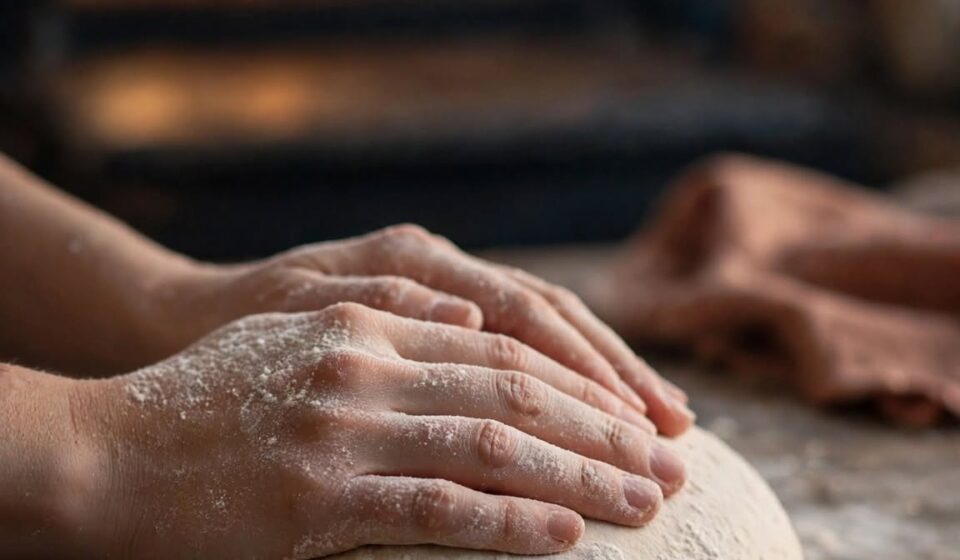
A baker named Samuel wakes at a quarter past three each morning, long before the street outside. He dresses in the dark so as not to wake his wife, walks to the bakery two blocks away, and switches on the ovens. By four o’clock, his forearms are white with flour, and the room smells of yeast.
For years, he worked without thinking much about it. The job was hard on his knees and back, and he often described himself, in a joking manner, as a man whose body had been rented out to the bread. Then one winter, a friend at church asked him a question that stayed with him. Did he ever give those early hours to God, or did he simply endure them?
The next morning, as he pressed his palms into the first batch of dough, Samuel said a short prayer under his breath. “These hands are yours, Lord.” Something in the work shifted, and he said it again the day after that.
What Apostle Paul Asked For
Samuel’s prayer echoes one of the most famous appeals in the New Testament. Apostle Paul wrote to the church in Rome that, in view of God’s mercy, they should offer their bodies as a living sacrifice, holy and pleasing to God.
A Living Sacrifice
12 Therefore, I urge you, brothers and sisters, in view of God’s mercy, to offer your bodies as a living sacrifice, holy and pleasing to God—this is your true and proper worship.
Romans 12:1 New International Version
He added that this was their true and proper worship.
Notice what apostle Paul did not say. He did not ask for their feelings or even their promises. He asked for their bodies. That is a strikingly physical request, and it was meant to be.
We sometimes picture the spiritual life as something that happens inside us, a matter of thoughts and beliefs. But the Bible keeps insisting that faith has hands and feet. The God Who made us embodied did not make a mistake. He made us this way, and He wants to be worshiped with all of it.
A Living Sacrifice
There is a contrast in apostle Paul’s phrase. In the Old Testament, a sacrifice was an animal brought to the altar and laid down once. But Paul speaks of a sacrifice that is living, which means it gets up again the next morning.
That is both a challenge and a relief. It is a challenge because the offering is never finished. We cannot make one grand gesture and consider the matter settled. But it is a relief because it means we do not have to get it right in a single moment. Each day, the offering can be made again, and each day we are given a fresh body to bring.
I believe that this will change how you think about ordinary tasks. A morning commute, a shift on your feet, an afternoon of sitting at a desk, a night of caring for a sick child. These are the places where the body spends most of its hours. If the body can be offered, then these hours are not outside the reach of worship.
You Are Not Your Own
Apostle Paul also wrote to the Corinthians about the body, and in a tougher voice.
19 Do you not know that your bodies are temples of the Holy Spirit, who is in you, whom you have received from God? You are not your own; 20 you were bought at a price. Therefore honor God with your bodies.
1 Corinthians 6:19-20 New International Version
They lived in a city where many people treated physical appetites as no one’s business but their own. But Paul reminded them that their bodies were temples of the Holy Spirit, and that they were not their own, because they had been bought at a price.
And I want to handle this carefully, because the verse is sometimes used to shame people about their bodies. That was never the point. Being bought at a price is not a statement about what is wrong with us. It is a statement about what we are worth. A thing bought at great cost is a thing that is treasured.
Paul’s conclusion was simple. Honor God with your body. And that can be done in many ways, some of them very plain. It can mean taking care of what we have been given, and using our bodies for love and not for harm. It can mean refusing to treat anyone else’s body, or our own, as something to be used and thrown away.
The Body God Gave You
Some of us carry a complicated relationship with our bodies. We are tired of them, or ashamed of them. Some of us live with illness or limits that no amount of effort will change. If that describes you, I do not want the language of offering to land as one more demand.
Consider what David said in one of his psalms. He praised God because he was fearfully and wonderfully made.
14 I praise you because I am fearfully and wonderfully made;
Psalm 139:14 New International Version
your works are wonderful,
I know that full well.
He did not say it because his body was strong or without flaw. He said it because he knew Who had formed him.
And consider the way the writer of Hebrews speaks of Christ, Who came saying that a body had been prepared for Him.
5 Therefore, when Christ came into the world, he said:
“Sacrifice and offering you did not desire,
Hebrews 10:5 New International Version
but a body you prepared for me;
God Himself took a body, with all that it involved. He grew tired and thirsty. He felt grief in His chest. If the Son of God was willing to inhabit flesh, our bodies cannot be too humble a place for Him to be honored.
A body that is limited or ill can still be offered. Sometimes the offering is a patient kindness to a nurse, or a prayer whispered in a hospital bed. God receives what we have, and not what we wish we had.

Rest Is Part of the Offering
There is one more surprise. We may assume that offering the body means working harder and doing more. But some of the most faithful acts a body can offer are acts of stopping.
Jesus fell asleep in a boat during a storm, with His head on a cushion.
38 Jesus was in the stern, sleeping on a cushion. The disciples woke him and said to him, “Teacher, don’t you care if we drown?”
Mark 4:38 New International Version
He was tired, and He rested, even when the waves were rising. Elsewhere, He told his disciples to come away to a quiet place and rest for a while.
31 Then, because so many people were coming and going that they did not even have a chance to eat, he said to them, “Come with me by yourselves to a quiet place and get some rest.”
Mark 6:31 New International Version
He treated sleep and quiet as something His friends needed, and not as a failure of devotion.
If your body is a gift to be offered, then it is also a gift to be cared for. Going to bed on time can be an act of consecration. So can eating a proper meal. Sometimes the most holy thing a person can do with their body is lie down and trust God to run the world while they sleep.
What Samuel Discovered
When we return to the bakery, we find that nothing about Samuel’s work had changed. The ovens were just as hot, and the dough was just as heavy. His knees still ached when the weather turned.
What had changed was the meaning of the early hours. He no longer thought of them as time rented out. He had begun to see them as time he was giving, and that made all the difference. The same hands that shaped the loaves had been handed over to God, and every morning he handed them over again.
A Prayer of Consecration for This Week
“Lord, you made this body and you know its limits, so take it again today and use it as you wish.”
One Small Practice for This Week
Choose one ordinary physical action that you do every day, such as washing your hands or walking to the car. Each time you do it this week, say a single line of offering in your mind. “These hands are yours. Or, this walk is yours.”
You are not trying to feel anything in particular. You are simply attaching a small prayer to something your body already does, so that the ordinary becomes a doorway.
Read Also: The Addiction Recovery Walk: Pornography and the Secret You Cannot Stop Keeping
Read Also: A Seat at the Table: The Tithe She Cannot Afford
Read Also: A Life Consecrated: What Consecration Actually Means
Conclusion
On the last Friday of that winter, Samuel finished the morning bake a little early. He stood at the counter with a cloth in his hand, looking at the racks of loaves cooling down. Through the front window, he could see the first workers walking by with their coats pulled tight.
His hands were red from the heat and dusted white to the wrist. He smiled and said it once more, a prayer to God. “These hands are yours, Lord.” Then he turned off the lights and went to unlock the door.
How might you offer an ordinary part of your day to God this week? Tell us in the comments, and we may feature your thoughts in a future entry.
See you next Saturday evening, for another step in a life consecrated.