
Tuesday again. This is where we land every Tuesday, with one small, practical way to steward what you have been given a little better this week, simple enough to finish and useful enough to notice by Friday.
This Week’s Tip
Choose one evening this week and cook dinner using only what is already in your kitchen. Do not go to the market first. Do not add a single ingredient to your shopping list. Open the cupboard and the fridge. See what is there, then make one meal from it.
It does not have to be impressive. A pot of rice with whatever vegetables are left, a soup built from the odds and ends, or eggs with the last of the bread will do. The goal is not a good recipe. The goal is to use what you already own before you buy more.
That is the whole tip. One meal, from your own shelves, with nothing wasted if you can help it.
If you do not cook, the same idea works for anything you stock up on. Use the last of the shampoo before opening a new bottle. Finish the half-used notebook before buying another. The principle is to look at what you have before reaching for more.
Why This One Matters
Most kitchens hold more food than we remember. A tin pushed to the back, a bag of beans bought for a recipe we never made, a half-packet of something that is about to turn. We buy with good intentions, and then the week gets busy, and the food slowly goes to waste.
Waste is a quiet thing, because it does not announce itself. Nobody feels guilty when a tomato softens on the counter. But added up over months, the money and food we throw away is considerable. Much of it came from someone’s labor, from the farmer who grew it and the driver who carried it.
There is a moment in the Gospels that has always stayed with me. After Jesus fed a crowd of thousands with a few loaves and fish, there was food left over. He did not simply walk away from it. He told his disciples to gather up the pieces that remained so that nothing would be wasted. They filled twelve baskets. A man who had just produced a miracle of abundance still cared about the crumbs.
12 When they had all had enough to eat, he said to his disciples, “Gather the pieces that are left over. Let nothing be wasted.” 13 So they gathered them and filled twelve baskets with the pieces of the five barley loaves left over by those who had eaten.
John 6:12-13 New International Version
That tells me something about how God sees what we have been given. Abundance is not an excuse for carelessness. The same hands that multiplied the bread asked for the leftovers to be collected. Generosity and thrift were not opposites in that moment. They were part of the same respect for the gift.
Earlier, in the wilderness, the Israelites were given manna each morning and told to gather only what they needed for the day. Those who tried to hoard it found it spoiled. The lesson was about trusting that enough would come, and about taking only what could be used. A pantry cooked from, instead of one forgotten, is a small modern echo of that rhythm.
Solomon wrote that the wise store up precious treasure and oil, but a foolish man devours all he has.
20 The wise store up choice food and olive oil,
Proverbs 21:20 New International Version
but fools gulp theirs down.
He is definitely not saying that we should hoard. He meant that a wise household pays attention to what it owns and does not burn through it without noticing.
How to Actually Try This Tip
Pick the evening now, before you finish reading, so that the decision does not slide into next week. Choose a night when you will be home and not too tired to stand at the stove.
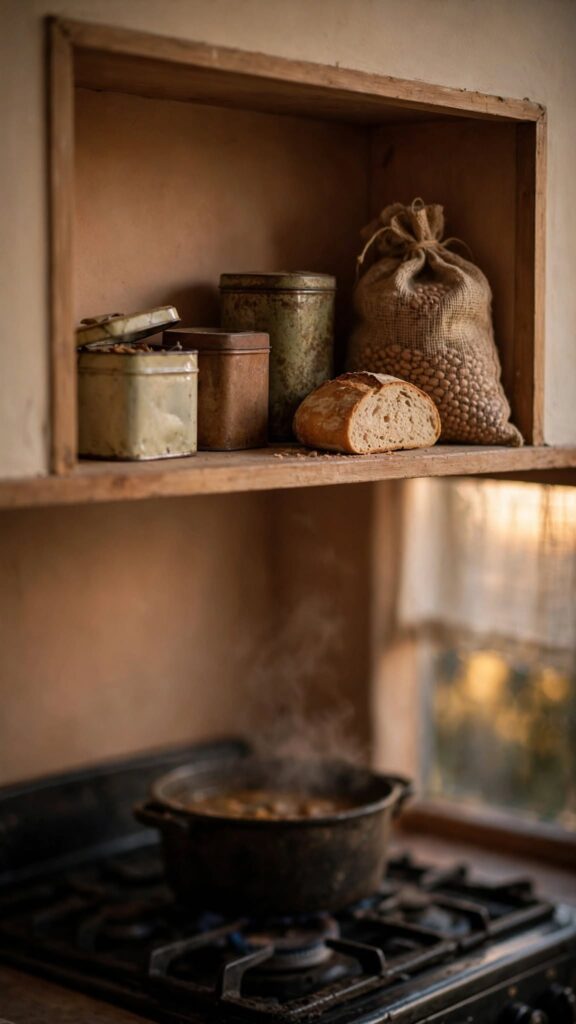
Before you cook, take five minutes to look. Open the cupboard and read the labels. Check the back of the fridge and the freezer drawers. You may find things you forgot you owned, and that small act of looking is already a form of stewardship.
Start with what will spoil first. Anything soft or close to its date should go to the front of the line. Build the meal around those items, and let the rest of the ingredients fill in.
Do not worry about a perfect result. A meal made from leftovers is often better than you expect, because the constraint forces you to be creative. If you are stuck, search for a recipe using your two or three main ingredients, and see what comes up.
If it turns out strange, eat it anyway and laugh. The point is to practice noticing what you have. Few meals are ruined by a missing herb.
Say a short prayer of thanks before you eat. It does not need to be long. Something as simple as, thank you for this food and for the hands that brought it, is enough. It turns an ordinary dinner into a small act of gratitude.
What This Small Habit Teaches
This tip is about more than saving money, though it may do that. It trains a way of seeing. When you get used to checking what you already have before buying, you begin to ask the same question in other areas of life. Do I really need a new one? Is there something already in my house that would serve? Do I have the time already, if I looked at it honest?
That habit protects us from the constant pull to acquire. Much of modern life is designed to make us feel that we are lacking something, and a pantry meal is a small quiet act of resistance. It says that what I have is enough for tonight.
It also teaches gratitude. When you take stock of a full cupboard, it is harder to feel poor. Many of us live with more food than most people in the world will see in a week, and we sometimes forget it because we are looking at the empty shelf instead of the full one.
If you share your home with a family, consider making it a game. Let the children choose one ingredient each, and see what meal you can build from them. Children often remember these evenings, and they learn early that nothing in the house is beneath attention.
Read Also: Why the Family Table Still Matters: A Christian Case for Eating Together Without the Guilt
Read Also: An Open Letter: To the Man Who Is Strong for Everyone and Has No One to Tell
Read Also: The Weekly Rhythm Reset: The Thirty to Ten-Minute Walk Without Your Phone
When It Does Not Work Out
Some weeks your kitchen will be nearly bare, and the tip will feel impossible. In that case, treat it as information. A nearly empty pantry may mean it is time to plan a shopping trip. Just try to make the trip with a list, and check what you have before you buy.
Other weeks, you might be so tired that cooking from scratch feels like too much. That is fine. Choose something simple, like toast and eggs, and call it done. A meal does not need to be a project to count.
If you live alone, the same tip applies. Cooking for one is often the reason food is wasted, because recipes assume a crowd. Make a larger pot and freeze half, or plan to eat the leftovers for lunch the next day.
If you find that you regularly throw food away, it may be worth looking at how you shop, not only how you cook. Buying smaller amounts more often, or planning your meals before you shop, can make a large difference over time.
Share Your Own Stewardship Habit
What is a small stewardship habit that has served you well, whether it touches your money or your time? Tell us about it in the comments below. Next Tuesday, we will feature one of your habits right here in the spotlight.
See you next Tuesday, for another small, practical way to steward whatever you have been given.